 21:38Oldies Music · 1966 · Greatest Hits by Year
Biggest Songs of 1975: Do You Remember Them?
Episode: Do You Remember These 10 Biggest Songs of 1975?
From Sora Music Rewind · 21 min ·This episode plays on YouTube — the button opens it in a new tab.
About These Biggest Songs of 1975
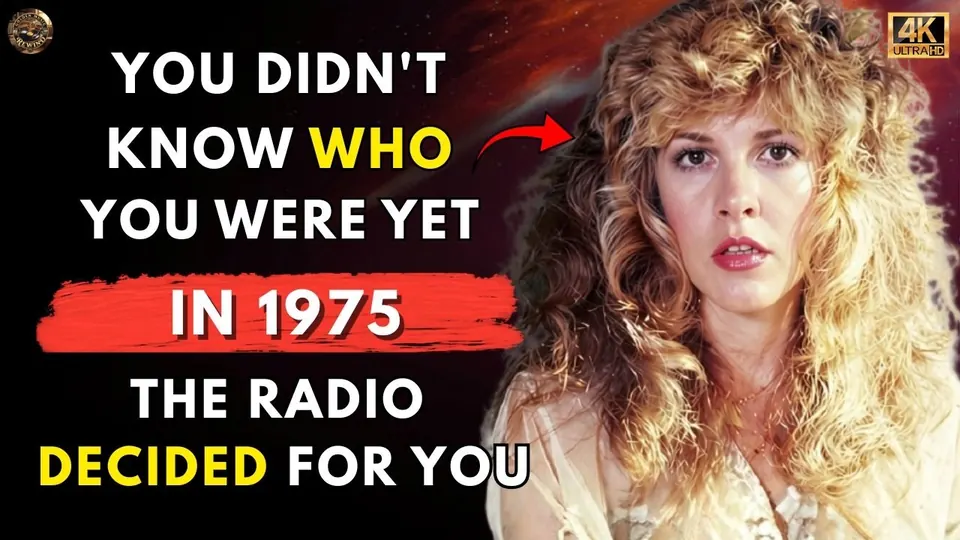
The biggest songs of 1975 came from a year when rock was growing bolder, the singer-songwriters were still riding high, and the long album track was finding its way onto the radio. This episode gathers ten songs from that year, from hard rock to soft California pop.
Not every song here was a giant hit single. A few were album tracks that grew into classics later. Below is the real story behind each one, with chart positions checked against Billboard records and other reliable sources.
The Countdown: 10 Songs That Defined 1975
#10: Sweet Emotion — Aerosmith (1975)
Bassist Tom Hamilton wrote the music around a riff he had been carrying for some time. The band recorded it on March 14, 1975, at the Record Plant in New York City for the album Toys in the Attic.
One studio detail really is true. No maracas were on hand, so Steven Tyler shook a packet of sugar instead. Joe Perry played the talk box that makes his guitar seem to sing the title. Tyler has said some of the angry lines were aimed at Perry's wife at the time, Elyssa.
The single peaked at No. 36 on the Billboard Hot 100. Small as that sounds, it was the band's breakthrough and their first Top 40 hit.
#9: Rhiannon — Fleetwood Mac (1975)
Stevie Nicks wrote "Rhiannon" in 1973 after reading a novel called Triad by Mary Bartlet Leader. She loved the name and felt she had to write something about the character. Only in 1978 did she learn that Rhiannon was also a figure from Welsh legend.
Nicks and Lindsey Buckingham joined Fleetwood Mac at the end of 1974, and the song appeared on the band's 1975 self-titled album. On stage it grew far more intense than the record. Mick Fleetwood later said her performance of it in those days was like an exorcism.
Released as a single in February 1976, it reached No. 11 on the Hot 100 that June. The album itself climbed slowly all the way to No. 1.
#8: Love Hurts — Nazareth (1975)
Boudleaux Bryant wrote "Love Hurts," and the Everly Brothers recorded it in 1960 as an album track. A dispute with their manager kept it from being released as their single.
Fifteen years later, the Scottish hard rock band Nazareth turned it into a raw, aching power ballad, with Dan McCafferty's rough voice at the center. The single did little in Britain, where it peaked at No. 41.
America was different. It reached No. 8 on the Billboard Hot 100 in early 1976, and it remains the only version of "Love Hurts" to become a hit single in the United States.
#7: Feel Like Makin' Love — Bad Company (1975)
Bad Company brought together Paul Rodgers and Simon Kirke from Free, Mick Ralphs from Mott the Hoople and Boz Burrell from King Crimson. Rodgers began the lyrics at 19, at a campsite in California while touring with Free.
Years later he played it for Ralphs, who added the big chord in the chorus. That change turned a gentle country-style tune into a rocker, with soft verses and a heavy chorus.
The band recorded it in September 1974 at Clearwell Castle in Gloucestershire, England, for their second album, Straight Shooter. Released in June 1975, the single reached No. 10 on the Hot 100.
#6: Wish You Were Here — Pink Floyd (1975)
On June 5, 1975, according to most accounts, the band was finishing the mix of "Shine On You Crazy Diamond," their tribute to founding member Syd Barrett, when an overweight man with a shaved head and no eyebrows walked into the studio at Abbey Road. Barrett had left the band in 1968 amid struggles with his mental health.
At first nobody knew him. Roger Waters did not recognize him, and Nick Mason was horrified when David Gilmour told him who it was. Waters was reportedly moved to tears.
The title song opens with sounds recorded from Gilmour's car radio as he turned the dial. The album had about 250,000 advance orders in Britain and went to No. 1 there and on the Billboard 200.
#5: Sister Golden Hair — America (1975)
Gerry Beckley wrote this sunny tune, and George Martin, the Beatles' producer, produced it. Beckley has said he openly tipped his hat to George Harrison's "My Sweet Lord" in the opening guitar part.
Under the easy melody is a man who has found love but is not ready to marry. Record World summed it up that way when the record came out.
It reached No. 1 on the Billboard Hot 100 in June 1975, the group's second chart-topper.
#4: Born to Run — Bruce Springsteen (1975)
Bruce Springsteen's first two albums won praise but sold poorly. Columbia agreed to fund one more album, with the understanding that it would drop him if this one failed.
He wanted a sound inspired by Phil Spector's "Wall of Sound." The title track alone took about six months to record, with as many as eleven guitar tracks, layers of overdubs and constant rewriting. Clarence Clemons's saxophone helps give it that rush of freedom.
The single reached only No. 23 on the Hot 100, but the album went to No. 3. In October 1975, Springsteen became the first artist to appear on the covers of Time and Newsweek in the same week.
#3: Lyin' Eyes — Eagles (1975)
The idea came at Dan Tana's, a Los Angeles restaurant and bar. Glenn Frey and Don Henley watched a young woman with an older, wealthy man, and Frey made the remark that became the title.
The Eagles were in what has been called their "nitpick phase." Producer Bill Szymczyk built the opening line from six different takes recorded over four days.
The single reached No. 2 on the Hot 100 and No. 8 on the country chart, the band's first country hit. It also won a Grammy for Best Pop Vocal Performance by a group.
#2: Bohemian Rhapsody — Queen (1975)
Freddie Mercury had been developing pieces of this song since the late 1960s, according to a former bandmate. In the studio, some sections carried as many as 180 overdubs, and the band reportedly sang for 10 to 12 hours a day. Brian May recalled holding up a tape that had been used so often he could see light through it.
Executives said the nearly six-minute song was too long to be a hit. Mercury insisted it go out whole or not at all. London DJ Kenny Everett was given a copy and asked not to play it. He played it 14 times in two days.
The record spent nine weeks at No. 1 in Britain, including Christmas 1975, and reached No. 9 in the United States in 1976.
#1: Kashmir — Led Zeppelin (1975)
Robert Plant wrote the words in 1973, inspired by a long drive through a desert region of southern Morocco. No member of the band had been to Kashmir. The track has been described as starting under the working title "Driving to Kashmir."
Jimmy Page worked out the music with drummer John Bonham in late 1973, in an unusual open tuning. John Paul Jones later added orchestration, and outside string and horn players were brought in.
It appeared on Physical Graffiti on February 24, 1975. It was an album track, not a hit single. Plant has called it the definitive Led Zeppelin song, and decades later he described it as "perfect Zeppelin."
Why 1975 Sounded So Different
Look at this list and you can hear two worlds side by side. On one side are tightly crafted radio singles like "Sister Golden Hair" and "Lyin' Eyes." On the other are long, ambitious pieces like "Bohemian Rhapsody" and "Kashmir" that broke the old three-minute rule.
Several of these songs also took the long road. "Rhiannon" and "Love Hurts" peaked in 1976, and "Sweet Emotion" stalled at No. 36. Their staying power came later, through FM radio, live shows and fans who kept playing the records.
How These Songs Still Carry Us Back
Nearly fifty years on, these songs still turn up on classic rock stations, in movies and at backyard gatherings.
Which of these biggest songs of 1975 brings back your clearest memory, and where were you when you first heard it?
Sources and Further Reading
Topics in This Story
Your turn...
Which song takes you right back — and where were you when you first heard it?
Tell us the story — fellow fans would love to hear it.
We check every fact — but if you spot a mistake, we'd love to know.Report a correction →
More Greatest Hits by Year Stories
21:38Oldies Music · 1966 · Greatest Hits by Year 19:33Oldies Music · 1967 · Greatest Hits by Year
Forgotten Hits of 1967 You Forgot You Knew
 25:16Oldies Music · 1969 · Greatest Hits by Year