 20:42Oldies Music · 1976 · One-Hit Wonders
80s One-Hit Wonders: The 10 Most Famous Songs
Episode: 10 Most Famous One-Hit Wonder Songs of the 1980s
From Sora Music Rewind · 21 min ·This episode plays on YouTube — the button opens it in a new tab.
About These 80s One-Hit Wonders
The 80s one-hit wonders in this countdown each had one huge moment on American radio, and then never came close to it again in the United States.
This episode counts down ten of the most famous of these songs. Here is the true story behind each one, checked against chart records and the best available sources.
What Makes a Song a One-Hit Wonder?
A one-hit wonder is an artist who scored one big hit on a national chart and nothing else that came close. For this list, the measure is the American Billboard Hot 100.
That label can feel unfair. Several of these acts had many hits in Britain or Europe and kept recording for decades. In America, though, they are remembered for one song.
Which Songs Made the Countdown? 10 Famous One-Hit Wonders of the 1980s
#10: Take On Me — a-ha (1985)
Three young Norwegians, Morten Harket, Magne Furuholmen and Paul Waaktaar-Savoy, left Norway for London to make it in music. The song grew out of an earlier tune called "Miss Eerie."
The road to success was bumpy. "Take On Me" was released in Britain in October 1984 and again in April 1985, and both times it flopped. The third release, in September 1985, finally reached number two in the UK.
In America, the song reached number one on the Billboard Hot 100 in October 1985. The famous video, directed by Steve Barron, mixed live action with pencil-sketch animation. About 3,000 frames were drawn over 16 weeks, and the video won six MTV Video Music Awards in 1986. The band's next US single, "The Sun Always Shines on T.V.," stopped at number 20, so this remains their only American top ten hit.
#9: 99 Luftballons — Nena (1983)
Guitarist Carlo Karges got the idea at a Rolling Stones concert in West Berlin in June 1982, where balloons were released into the sky. He wondered what would happen if they drifted over the Berlin Wall and were mistaken for something dangerous.
Released in West Germany in March 1983, the German-language version climbed to number two on the Billboard Hot 100 in early 1984, held back only by Van Halen's "Jump."
An English version, "99 Red Balloons," topped the British chart, but in America the German recording remains Nena's only hit.
#8: Tainted Love — Soft Cell (1981)
Soul singer Gloria Jones first recorded "Tainted Love" in 1964. In 1981, the British duo of Marc Almond and Dave Ball turned it into a cool, electronic pulse.
The pressure was real. Their label suggested this single would be their last release if it did not sell. The track was recorded in a day and a half, and Almond's first vocal take is the one on the record.
It went to number one in Britain. In America, it peaked at number eight in the summer of 1982, and it spent a then-record 43 weeks on the Billboard Hot 100.
#7: Come On Eileen — Dexys Midnight Runners (1982)
Dexys Midnight Runners formed in Birmingham, England, in 1978. For the album Too-Rye-Ay, leader Kevin Rowland blended soul with Celtic folk, added a fiddle section and dressed the band in dungarees, scarves and scruffy waistcoats.
Rowland first said Eileen was a childhood girlfriend. He later explained that she was a composite, written to make a point about the Catholic repression he felt growing up.
The song was Britain's best-selling single of 1982. In April 1983, it reached number one on the Billboard Hot 100, knocking off Michael Jackson's "Billie Jean." In America, the band is still remembered for this song alone.
#6: Der Kommissar — After the Fire (1982)
Austrian singer Falco released "Der Kommissar" in December 1981, and it went to number one in Austria and West Germany. The British rock band After the Fire recorded a version with English lyrics in 1982.
At first, the record went nowhere, and in December 1982 the band announced on stage that they were breaking up. Then, in February 1983, the song entered the Billboard Hot 100. It climbed all the way to number five, a big American hit for a band that no longer existed.
#5: Mickey — Toni Basil (1982)
Toni Basil was a respected choreographer long before she had a hit. She was the main choreographer for David Bowie's Diamond Dogs Tour in 1974, and she helped create David Byrne's famous moves in the Talking Heads video "Once in a Lifetime."
"Mickey" began as "Kitty," a song by the British group Racey, written by Mike Chapman and Nicky Chinn. Basil changed the name, added the "Oh Mickey" cheer, and wore a cheerleader outfit, including a sweater from her own high school in Las Vegas. She directed, produced and choreographed the video herself.
The song reached number one on the Billboard Hot 100 on December 11, 1982.
#4: Whip It — Devo (1980)
Devo came out of Kent State University and Akron, Ohio, built on a satirical idea they called "de-evolution." Gerald Casale wrote the lyrics to poke fun at American can-do optimism, drawing on Thomas Pynchon's novel Gravity's Rainbow. Mark Mothersbaugh later said the words were also meant as a pep talk for President Jimmy Carter during the 1980 election.
The famous whip crack was made with a synthesizer. In the video, the band wore red, flowerpot-shaped hats called energy domes.
Many listeners assumed the song was about something racier, and the band later admitted they played along with that idea. It peaked at number 14 on November 15, 1980, and earned a gold record. It is still Devo's only Top 40 hit. Mark Mothersbaugh later became a busy composer for TV, including Rugrats.
#3: I Ran (So Far Away) — A Flock of Seagulls (1982)
Mike Score was working as a hairdresser in Liverpool when he bought a secondhand synthesizer, and the band took shape around him in 1979. It is a fitting start for a singer later remembered for one of the decade's most talked-about haircuts.
The song's space-age lyrics were sparked partly by a poster of a couple running from a flying saucer, which the band wanted for their album cover.
The video, shot in a room covered in foil and mirrors, played constantly on the young MTV channel in the summer of 1982. That exposure helped push the song to number nine on the Hot 100, while in Britain it only reached number 43.
#2: Turning Japanese — The Vapors (1980)
The Vapors were discovered in a pub by Bruce Foxton of The Jam. Singer David Fenton wrote the song as a love song about a man pining over a photograph of his ex-girlfriend, drawn from his own experience of rejection.
Many listeners believed the title was a sly joke about something else. Fenton denied that reading, though he joked that the rumor may have helped make it a hit.
The song reached number three in Britain and number 36 in America. The band split in 1982 and reunited in 2016.
#1: Somebody's Watching Me — Rockwell (1984)
Rockwell was the stage name of Kennedy Gordy, son of Motown founder Berry Gordy. He was estranged from his father at the time, and his father was reportedly lukewarm about his music until he heard this song.
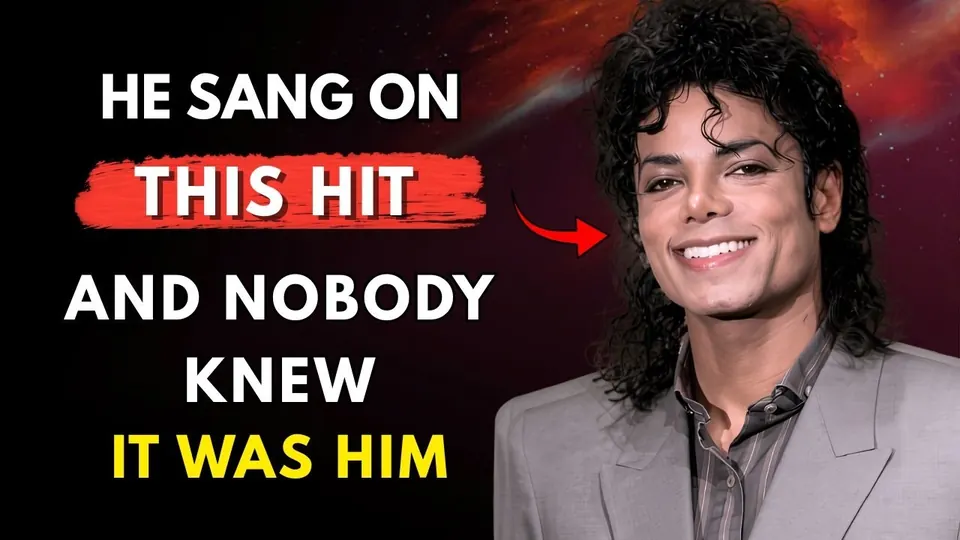
The chorus is sung by Michael Jackson, who was not credited on the record, and Jermaine Jackson added backing vocals. Released by Motown on December 27, 1983, the single reached number two on the Billboard Hot 100 and number one on the Black singles chart in 1984.
Rockwell's next single, "Obscene Phone Caller," never came close, and this remains the one song most Americans know him for.
Why These 80s One-Hit Wonders Still Matter
Look at this list and you can see how the 1980s music world worked. MTV could turn a clever video into a number one hit, as it did for a-ha and A Flock of Seagulls. A song in German could climb the American chart. A band could split up and then score its biggest hit weeks later.
These artists did not stay at the top for long in the United States, but their songs never really left. They still fill dance floors and oldies stations more than forty years later.
Which of these ten songs takes you right back, and where were you the first time you heard it on the radio?
Sources and Further Reading
Topics in This Story
Your turn...
Which song takes you right back — and where were you when you first heard it?
Tell us the story — fellow fans would love to hear it.
We check every fact — but if you spot a mistake, we'd love to know.Report a correction →