 20:42Oldies Music · 1976 · One-Hit Wonders
70s One-Hit Wonders You Still Know by Heart
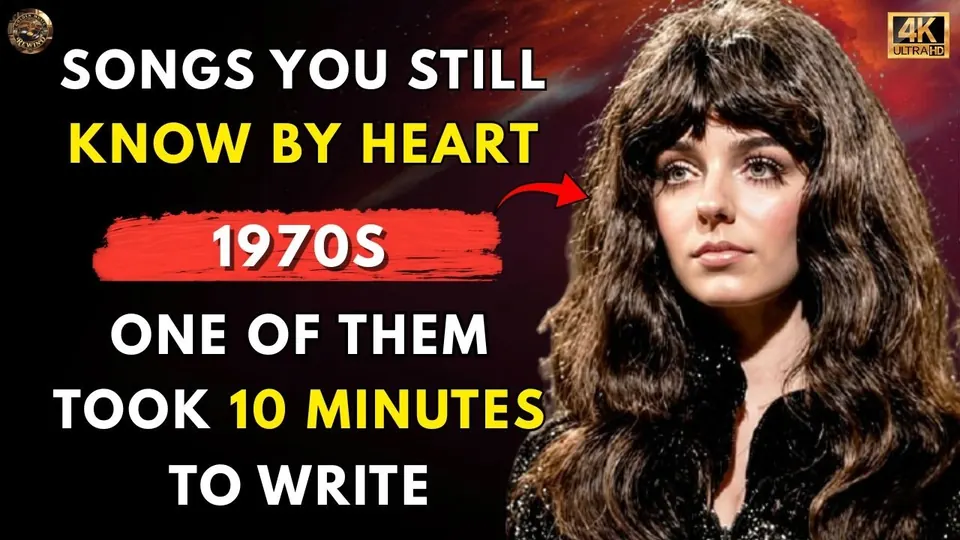
Episode: 10 One-Hit Wonders From the 70s You Still Know by Heart
From Sora Music Rewind · 20 min ·This episode plays on YouTube — the button opens it in a new tab.
About These 70s One-Hit Wonders
The 70s one-hit wonders on this list are songs almost everyone can still sing along to, even if few people can name a second hit by the same artist. They came from London studios, Pittsburgh bar stages, a Dutch rock band and a Scottish hillside at dawn.
This episode counts down ten of them, from #10 to #1. The stories below were checked against chart records and other reliable sources. Where a popular legend did not hold up, we have corrected it, and where an artist actually had more than one hit, we say so.
What Counts as a One-Hit Wonder?
There is no official rule. Most music writers use the term for an act that reached the Billboard Top 40 only once. Others use it more loosely for an artist known to the general public for just one song.
By the strict Top 40 measure, several acts here had a second hit, and a few had big hits in other countries. By the looser measure, each is remembered in America mainly for the one song below.
The Countdown: 10 One-Hit Wonders From the 70s
#10: Kung Fu Fighting — Carl Douglas (1974)
"Kung Fu Fighting" was meant to be a B-side. Producer Biddu spent more than two hours of a three-hour session on the A-side, which left only about ten minutes of studio time. They recorded the song in two takes.
Because it was only a B-side, Biddu said he went "over the top" with the grunts, shouts and chopping sounds. Pye Records insisted it be the A-side instead. It reached No. 1 in Britain in September 1974 and then topped the Billboard Hot 100.
#9: Come and Get Your Love — Redbone (1974)
Lolly Vegas wrote this song and played the electric sitar that gives it its shimmering sound. He and his brother Pat Vegas produced it. It peaked at No. 5 on the Billboard Hot 100 in April 1974, making Redbone the first Native American band to reach the top five.
Strictly speaking, Redbone had one more Top 40 hit, "The Witch Queen of New Orleans," which reached No. 21 in 1972. Forty years later, "Come and Get Your Love" found a new audience when Chris Pratt danced to it in the opening scene of Guardians of the Galaxy (2014).
#8: Play That Funky Music — Wild Cherry (1976)
Wild Cherry was a rock band playing the 2001 Club in Pittsburgh for a mostly Black audience. During a break, a patron asked drummer Ron Beitle, "Are you going to play some funky music, white boys?" Rob Parissi grabbed a pen and a drink-order pad and wrote the song in about five minutes.
Session players Chuck Berginc, Jack Brndiar, Joe Eckert and Rick Singer added the horn riff. The record reached No. 1 on the Billboard Hot 100 on September 18, 1976, and also topped the soul chart. It was the group's only U.S. Top 40 song.
#7: In the Summertime — Mungo Jerry (1970)
Ray Dorset said he wrote this song in about ten minutes on a secondhand guitar, during time off from his job at a lab for the watch company Timex. The record has no drum kit. The rhythm comes from Dorset stomping his foot, along with banjo, jug, piano and string bass.
It held No. 1 in Britain for seven weeks in 1970 and reached No. 3 in the United States. In America it was the band's only big hit, but at home Mungo Jerry went on to another No. 1, "Baby Jump," in 1971.
#6: Dancing in the Moonlight — King Harvest (1972)
The song's cheerful sound hides a frightening backstory. Its writer, Sherman Kelly, has said he was badly beaten by a gang on the island of St. Croix around 1969 and left for dead. While recovering, he wrote a song imagining a peaceful, joyful night of celebration.
Kelly's earlier band Boffalongo recorded it first, in 1970, but it went nowhere. King Harvest, whose lead singer Dave "Doc" Robinson had also been in Boffalongo, released their version in 1972. It reached No. 13 on the Billboard Hot 100 in early 1973. The band never matched it and broke up for good in 1976.
#5: Magic — Pilot (1974)
David Paton and Billy Lyall of the Scottish band Pilot wrote "Magic." Paton said it was inspired by a sunrise seen from Blackford Hill in Edinburgh, and by his wife, who had never seen a daybreak.
The producer was Alan Parsons, who had engineered Pink Floyd's The Dark Side of the Moon. Released in Britain in 1974 and in America in 1975, the song reached No. 5 on the Billboard Hot 100 that summer and topped the chart in Canada.
#4: Slow Ride — Foghat (1975)
According to drummer Roger Earl, "Slow Ride" grew out of a jam with the band's new bassist, Nick Jameson, who taped it on a cassette player. Jameson also produced the record, and singer Dave Peverett added the lyrics. The album version runs over eight minutes.
It reached No. 20 on the Billboard Hot 100, Foghat's highest-charting single, and the album Fool for the City went platinum. To be fair to Foghat, they were not truly a one-hit band. They placed four other singles in the Top 40, including "Third Time Lucky" at No. 23 in 1979. "Slow Ride" is simply the one everyone knows.
#3: I Can See Clearly Now — Johnny Nash (1972)
According to the Associated Press, Johnny Nash wrote this song while recovering from cataract surgery. He recorded it in London and produced it himself. Its easy reggae feel came from his years working in Jamaica, where he had signed a young Bob Marley to a publishing deal.
The single reached No. 1 on the Billboard Hot 100 on November 4, 1972, and stayed there four weeks. Nash also had other hits, including "Hold Me Tight" at No. 5 in 1968 and "Stir It Up" at No. 12 in 1973. Johnny Nash died in Houston on October 6, 2020, at age 80.
#2: Venus — Shocking Blue (1970)
Guitarist Robbie van Leeuwen of the Dutch band Shocking Blue built "Venus" on "The Banjo Song," recorded earlier by the American folk group the Big 3. Mariska Veres sang lead in a deep, strong voice.
The record came out in the Netherlands in July 1969. It reached No. 1 on the Billboard Hot 100 for the week ending February 7, 1970, the first song by a Dutch band to top that chart. In 1986, Bananarama took their cover of "Venus" to No. 1 again.
#1: My Sharona — The Knack (1979)
Doug Fieger was 25 when he met Sharona Alperin, who was 17, and she inspired months of his songwriting. He wrote "My Sharona" with guitarist Berton Averre, and producer Mike Chapman recorded it in April 1979 in a single take, not counting the backing vocals.
It spent six weeks at No. 1 and was Billboard's top song of 1979. The band was quickly compared to the Beatles, and a backlash followed, including a "Knuke the Knack" campaign. Their next single, "Good Girls Don't," reached No. 11, so the Knack just missed a second Top 10 hit. Doug Fieger died of cancer on February 14, 2010, at 57.
Why These 70s One-Hit Wonders Still Stick With Us
Most of these songs were never planned as big statements. One was a throwaway B-side. One began as a question shouted across a bar. One was written in about ten minutes on a break from a day job.
That may be why they last. They are simple, cheerful and easy to sing, and they turn up at weddings, ball games and in movies decades later. A whole career can fade from memory, but a good chorus stays.
Which of these songs can you still sing word for word, and where were you the first time it came on the radio?
Sources and Further Reading
Topics in This Story
Your turn...
Which song takes you right back — and where were you when you first heard it?
Tell us the story — fellow fans would love to hear it.
We check every fact — but if you spot a mistake, we'd love to know.Report a correction →