 25:18Oldies Music · Stories Behind the Songs
Michael Jackson Disco Hits That Made an Icon
Episode: The Best-Selling Disco Song That Turned Michael Jackson Into a Global Icon
From Sora Music Rewind · 20 min ·This episode plays on YouTube — the button opens it in a new tab.
About These Michael Jackson Disco Hits
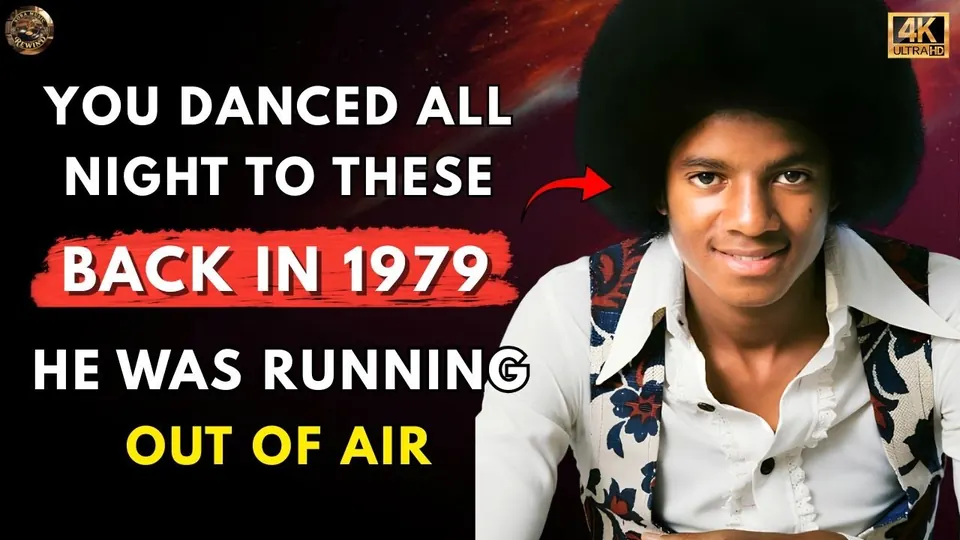
The Michael Jackson disco hits in this countdown come from a short, remarkable stretch between 1978 and 1980, when a young singer who had grown up on stage found his own voice as a writer and producer. Some of these songs were huge radio hits. Others were album tracks that lived on dance floors and in concert.
The list mixes two parts of his career. Five songs come from his work with his brothers in The Jacksons, and five come from his solo album Off the Wall, produced by Quincy Jones. The year after each title is the year of the album it first appeared on. Chart positions and writing credits below were checked against Billboard chart records and other published sources.
What Songs Made the Countdown
#10: Lovely One — The Jacksons (1980)
"Lovely One" was the first single from Triumph, the Jacksons' 1980 album. Michael wrote it with his younger brother Randy, and the brothers produced it themselves.
Released in September 1980, it climbed to number 12 on the Billboard Hot 100, number two on the soul chart and number one on the dance club chart. The trade magazine Record World singled out Michael's lead vocal for praise.
#9: Burn This Disco Out — Michael Jackson (1979)
This high-energy number closes Off the Wall. It was written by Rod Temperton, the English songwriter from the band Heatwave, who also wrote two of the album's biggest singles.
It was never released as a single on its own, so many listeners only met it by playing the album all the way through. It was recorded in the spring of 1979, with Louis Johnson of the Brothers Johnson on bass.
#8: Can You Feel It — The Jacksons (1980)
Michael wrote "Can You Feel It" with his older brother Jackie, and he shares the lead vocal with Randy. The sound is big and dramatic, with sweeping strings and both an adult choir and a children's choir behind the brothers.
It appeared on Triumph in 1980 and came out as a single in February 1981. In the United States it peaked at only number 77 on the Hot 100, but it reached number six in Britain.
Many people remember it best for its music video, a short film called "The Triumph," with visual effects by Robert Abel and Associates, the company that later worked on Tron.
#7: Get on the Floor — Michael Jackson (1979)
This is one of three songs on Off the Wall with Michael's name in the writing credits, and the only one he co-wrote. His partner was bassist Louis Johnson, who also arranged the rhythm track.
His thumb-slapping bass line drives the whole song. The track was recorded in April 1979 and was not one of the album's official singles, but it became a favorite with fans who knew the album well.
#6: Workin' Day and Night — Michael Jackson (1979)
Michael wrote this song alone, and he co-produced it with Quincy Jones. At about 128 beats per minute, it is one of the fastest songs he ever recorded. A demo version from 1978 was later included as a bonus track on the 2001 special edition of Off the Wall.
It was never a stand-alone single. In the United States it appeared as the B-side of "Rock with You." On stage, though, it became a staple. The Jacksons performed it on their 1981 Triumph Tour and their 1984 Victory Tour, and Michael kept it in his own shows on the Bad World Tour in the late 1980s.
#5: Blame It on the Boogie — The Jacksons (1978)
The story behind this one has a funny twist. It was written by an English singer named Mick Jackson, together with his brother Dave Jackson and Elmar Krohn. No relation to the famous family from Gary, Indiana.
Mick Jackson's own recording was played at the Midem music fair in 1978. According to Mick, the Jacksons' manager heard it and took a tape back to the United States, and the brothers quickly cut their own version. Both records came out in Britain within days of each other in September 1978, and the music papers called it the "Battle of the Boogie."
The Jacksons won. Their version reached number eight in Britain, while Mick's reached number 15. In America the group's single went to number three on the R&B chart. Mick Jackson later said their version had a "magic extra 2%" that made it special.
#4: Off the Wall — Michael Jackson (1979)
The album's title song was another Rod Temperton composition. Its message is simple: leave the worries of the workweek behind and lose yourself in the music for a night.
It was recorded in December 1978 in Los Angeles, with engineer Bruce Swedien recording and mixing. Released as a single in the United States in early 1980, it reached number ten on the Billboard Hot 100 and number seven in Britain.
It helped the album make history. Off the Wall became the first album by a solo artist to produce four top-ten hits on the Hot 100.
#3: Shake Your Body (Down to the Ground) — The Jacksons (1978)
This song comes from Destiny, the album that changed everything for the brothers. Epic Records allowed them to write and produce their own material for the first time. Much of the album was recorded at the family's home studio.
Michael wrote "Shake Your Body" with Randy, and it was first worked up as a demo called "Shake a Body." Released as a single in January 1979, it reached number seven on the Hot 100, number three on the soul chart and number four in Britain. It was certified platinum and sold more than two million copies.
#2: Rock with You — Michael Jackson (1979)
After the excitement of the first single, Quincy Jones and Rod Temperton went in a smoother direction. "Rock with You" is a warm, mid-tempo love song, with John Robinson on drums and Michael's voice floating over the strings.
Released in October 1979, it reached number one on the Billboard Hot 100 and stayed there for four weeks, from January 19 to February 9, 1980. It also spent five weeks at number one on the R&B chart.
#1: Don't Stop 'Til You Get Enough — Michael Jackson (1979)
This was the song that launched Off the Wall, and Michael wrote it himself. He later said the melody would not leave him, and he kept humming it around the family home in Encino. Because he did not play keyboards, he asked his brother Randy to play it on the piano in the family studio.
The record begins with Michael speaking softly before the music bursts in. It reached number one on the Billboard Hot 100 on October 13, 1979, his second solo number one after "Ben," and it held the top of the soul chart for six weeks.
At the 1980 Grammy Awards it won Best Male R&B Vocal Performance, the first Grammy of Michael's solo career.
How Michael Jackson Took Control Between 1978 and 1980
Look at the writing credits on this list and you can see a young artist growing up. On Destiny in 1978, the brothers wrote and produced their own songs. On Off the Wall in 1979, Michael co-produced the tracks he wrote, working beside Quincy Jones. On Triumph in 1980, he and his brothers were back in charge of their own sound.
He also learned from great collaborators, from Rod Temperton to Louis Johnson. Off the Wall has since sold more than 20 million copies worldwide.
Why These Michael Jackson Disco Hits Still Matter
By 1979, many people in America were tired of disco, and some radio stations turned against it. These songs came through that moment with their reputation intact. Their grooves were built on real musicians, strong melodies and a singer who sounded completely at home.
They also show the bridge between the boy who sang with his brothers on Motown and the star who would make Thriller a few years later. Michael Jackson died in 2009 at age 50, but these songs still fill dance floors at weddings and reunions today.
Which of these songs takes you back to a dance floor of your own, and who were you dancing with when you first heard it?
Sources and Further Reading
Topics in This Story
Your turn...
Which song takes you right back — and where were you when you first heard it?
Tell us the story — fellow fans would love to hear it.
We check every fact — but if you spot a mistake, we'd love to know.Report a correction →