 27:48Oldies Music · Stories Behind the Songs
Love Songs That Were Never About Love
Episode: 10 Love Songs That Were Never About Love... Do You Remember Them All?
From Sora Music Rewind · 25 min ·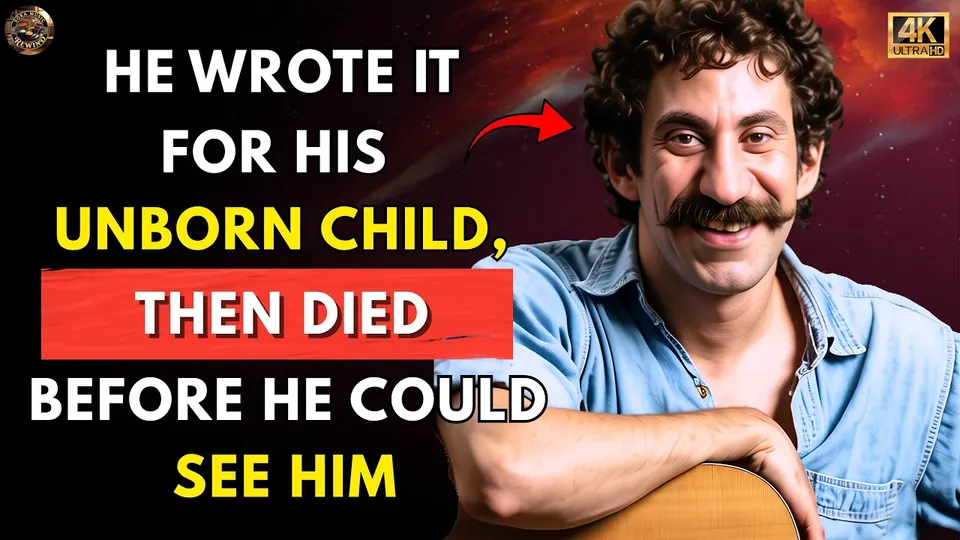
What Makes These Love Songs Not About Love?
This countdown looks at love songs not about love: ten famous tunes that sound romantic but tell a very different story. They play at weddings, on slow-dance nights and on late-night radio, yet the stories behind them involve jealousy, grief, addiction and even a busy signal.
Each entry below was checked against chart records, interviews and reliable reference sources. Where the video got a detail wrong, the article sets it straight.
The Countdown: 10 Love Songs That Were Never About Love
#10: Every Breath You Take — The Police (1983)
Sting wrote this song in 1982 in Jamaica, at GoldenEye, the estate once owned by James Bond creator Ian Fleming. His first marriage, to actress Frances Tomelty, was ending at the time.
Andy Summers built the guitar part from Bartók-inspired violin exercises and recorded it in one take.
The single spent eight weeks at No. 1 and won two Grammys, including Song of the Year. In 2019, BMI honored it for nearly 15 million radio plays. Sting has long said the song is about surveillance and control, and he has called it sinister. When couples tell him it was their wedding song, he has reportedly answered, "Well, good luck."
#9: The House of the Rising Sun — The Animals (1964)
This is an old American folk song with no known author. The earliest known recording dates from 1933. Eric Burdon first heard it sung by folk singer Johnny Handle in a Newcastle club, while the band's arrangement traced back through Bob Dylan to Greenwich Village singer Dave Van Ronk.
The Animals recorded it in one take in London in May 1964, and producer Mickie Most later said it took about 15 minutes. Only organist Alan Price received the arrangement credit, which left lasting resentment.
The record went to No. 1 in Britain and then America, the first British Invasion No. 1 not by the Beatles. The lyrics describe a house in New Orleans that ruined lives, not a romance.
#8: You're So Vain — Carly Simon (1972)
Carly Simon began this song under another title, then reworked it after seeing a man at a party admire himself in a mirror. Her pianist, Billy Mernit, inspired the line about clouds in coffee after noticing the reflection in her cup.
Mick Jagger sang uncredited backing vocals after calling the studio during the session. The single spent three weeks at No. 1 in early 1973.
In 2003, Dick Ebersol paid $50,000 at a charity auction to learn the subject's name, and he could reveal only that it contained the letter E. A year later Simon added A and R. In her 2015 memoir she confirmed that the second verse is about Warren Beatty, while saying the song refers to three men.
#7: In the Air Tonight — Phil Collins (1981)
Phil Collins wrote this song after his divorce from his first wife, Andrea Bertorelli, in 1980. He has said he is not quite sure what it means, only that it holds anger, despair and frustration.
The famous drum sound grew out of a studio accident a year earlier. While Collins was drumming on Peter Gabriel's third album, engineer Hugh Padgham opened a heavily compressed talkback microphone above the kit, creating what became known as gated reverb.
The single reached No. 2 in Britain and topped the charts in West Germany and several other European countries, but peaked at No. 19 in America. Its video got heavy play when MTV launched in August 1981. A widespread rumor claims the lyrics describe a drowning Collins witnessed. Collins has denied it, saying the song comes from the anger of a separation.
#6: Dust in the Wind — Kansas (1977)
Kerry Livgren came up with the guitar line as a fingerpicking exercise. His wife, Vicci, encouraged him to write words for it. The title echoes a thought from the Book of Ecclesiastes about the shortness of life.
For a progressive rock band, it was a gentle departure, built on acoustic guitar and Robby Steinhardt's violin. Released as a single in 1978, it reached No. 6 on the Billboard Hot 100, Kansas's only U.S. Top 10 single, and was later certified triple platinum.
The melody also traveled far from home. During Burma's 1988 uprising, Naing Myanmar set new protest lyrics to it, and the song returned as an anthem after the 2021 military coup.
#5: Fire and Rain — James Taylor (1970)
The first verse is about Suzanne Schnerr, a childhood friend who took her own life while Taylor was recording in London. His friends held back the news for months. Other verses deal with his struggle with addiction and his time recovering at the Austen Riggs Center in Massachusetts.
Peter Asher produced the record, with Carole King on piano and Russ Kunkel playing drums with brushes. It reached No. 3 on the Billboard Hot 100, Taylor's first Top 10 hit, and entered the Grammy Hall of Fame in 1998.
A rumor said a line about "flying machines" referred to a plane crash. It actually refers to Taylor's earlier band, the Flying Machine.
#4: Alone Again (Naturally) — Gilbert O'Sullivan (1972)
Behind the soft melody is a man left at the altar who considers ending his life, then mourns both his parents. O'Sullivan has said the song is not autobiographical. His mother was alive when he wrote it, and his father, whom he was not close to, died when he was 11.
It spent six non-consecutive weeks at No. 1 in America in 1972 and earned Grammy nominations.
Two court cases followed. In 1982, a British court ruled for O'Sullivan against his former manager, Gordon Mills, in a royalties dispute. In 1991, his suit over Biz Markie's unauthorized sample of the song helped establish that samples must be cleared first.
#3: Time in a Bottle — Jim Croce (1973)
Jim Croce wrote this song after his wife, Ingrid, told him in December 1970 that she was expecting their son. It is a song from a father to a child, not to a sweetheart. Producer Tommy West found a harpsichord left in the studio, and it became part of the arrangement.
The song first appeared on a 1972 album, then was featured in the ABC TV movie She Lives!, which aired September 12, 1973. Eight days later, Croce died in a plane crash.
Released as a single after his death, it reached No. 1 for two weeks around the New Year of 1974. It was the third posthumous No. 1 in Billboard history, after Otis Redding and Janis Joplin.
#2: One — Three Dog Night (1969)
Harry Nilsson wrote this song after calling someone and getting a busy signal. He stayed on the line and turned that repeating tone into the song's opening notes.
Three Dog Night released its version in April 1969 with Chuck Negron on lead vocals. It reached No. 5 on the Billboard Hot 100 and was certified gold.
Negron battled heroin addiction for years before getting sober in 1991. He died on February 2, 2026, at 83.
#1: Got to Get You into My Life — The Beatles (1966)
This bright, horn-driven Revolver track sounds like a love letter. Paul McCartney later explained it was written after he was first introduced to marijuana, calling it an ode to pot in his 1997 authorized biography, Many Years From Now.
John Lennon admired the lyrics but believed they were about LSD, as he said in his 1980 interviews with David Sheff. He died that December, years before McCartney's fuller explanation.
McCartney also produced a cover by Cliff Bennett and the Rebel Rousers, released the same day as Revolver. It became Bennett's biggest hit, reaching No. 6 in Britain. The Beatles' own version came out as a U.S. single in 1976 and reached No. 7.
Why Do We Hear Love Songs That Are Not About Love?
A soft guitar, a sweet harmony or a sweeping chorus tells our ears this is romance, even when the words describe a stalker, a funeral or a phone that will not answer.
That is part of why these records last. They still hold the true story for anyone who listens closely.
Which of these love songs not about love surprised you most, and did you ever dance to one of them yourself?
Sources and Further Reading
Topics in This Story
Your turn...
10 Love Songs That Were Never About Love... Do You Remember Them All?
Tell us the story — fellow fans would love to hear it.
We check every fact — but if you spot a mistake, we'd love to know.Report a correction →