 22:42Oldies Music · Sad Songs That Make Us Cry
Sad Songs That Make You Cry You've Never Heard
Episode: Top 10 Songs That Will Make You Cry Youve Probably Never Heard
From Sora Music Rewind · 17 min ·This episode plays on YouTube — the button opens it in a new tab.
About These Sad Songs You've Never Heard Like This
Most of these may not be sad songs you've never heard, but they are songs whose full stories many listeners have never heard. Behind each melody is a real loss, a hard season or a moment of honesty that the artists chose to share.
This countdown follows our episode from #10 to #1. We checked the chart positions and background details against reliable sources, and corrected several popular stories that turned out not to be true.
The Countdown: 10 Songs That Will Make You Cry
#10: The Sound of Silence — Simon and Garfunkel (1965)
Paul Simon said he wrote this song at 21, sitting in his bathroom with the lights off, because he liked the echo of the tiles. The duo's acoustic album Wednesday Morning, 3 A.M. sold only about 3,000 copies when it came out in 1964, and Simon moved to London.
In June 1965, producer Tom Wilson added electric guitar, bass and drums without telling them. Simon learned of the new version while in Denmark, when he saw it climbing the Billboard chart. It reached No. 1 for the week ending January 1, 1966, and became, as music writer Geoffrey Himes put it, a generation's shorthand for alienation.
#9: The Living Years — Mike and the Mechanics (1988)
Mike Rutherford of Genesis wrote this song with B.A. Robertson after the two realized their fathers had died around the same time. Both men had things left unsaid, and the lyric is about making peace with a parent while you still can.
Paul Carrack, whose own father died when he was a boy, sang the lead, with a choir joining at the end. Released in December 1988, it reached No. 1 on the Billboard Hot 100 on March 25, 1989, the band's only American No. 1. It also won an Ivor Novello Award in Britain.
#8: Angie — The Rolling Stones (1973)
Keith Richards wrote the melody and the title while at a clinic in Vevey, Switzerland. The band recorded it in Kingston, Jamaica, at the end of 1972, with Nicky Hopkins on piano and a string arrangement behind the acoustic guitars.
Rumors tied the name to Angela Bowie or Angie Dickinson. Richards has given different answers over the years, at one point linking it to his newborn daughter, Angela, and later saying it was not about anyone in particular. The single reached No. 1 on the Billboard Hot 100 in October 1973.
#7: Wish You Were Here — Pink Floyd (1975)
The song opens as if someone is listening to a car radio and then begins to play along. David Gilmour recorded the radio sound from his own car and played the intro on a 12-string guitar. You can hear him cough and breathe before the main guitar comes in.
Many fans hear it as a tribute to former bandmate Syd Barrett, though Roger Waters has said the lyrics were directed partly at himself. On June 5, 1975, while the band was finishing the album, Barrett unexpectedly turned up at Abbey Road, so changed that some of them did not recognize him. The album reached No. 1 in both the United States and Britain.
#6: One Sweet Day — Mariah Carey and Boyz II Men (1995)
After her close friend and producer David Cole died in 1995, Mariah Carey began writing a song about how losing someone changes your life. When she met Boyz II Men, she learned that Nathan Morris was writing a similar song for the group's late tour manager, Khalil Rountree.
They joined her chorus to their melody. The record debuted at No. 1 and stayed there for 16 weeks, a Hot 100 record that stood for 23 years. Carey also widened the chorus to speak to people who had lost loved ones to AIDS.
#5: Everybody Hurts — R.E.M. (1993)
Drummer Bill Berry wrote much of this song, though all four members share the credit. Guitarist Peter Buck said the plain, direct words were aimed at teenagers, and many listeners hear it as a gentle plea not to give up on life.
A drum machine keeps the steady beat, and former Led Zeppelin bassist John Paul Jones arranged the strings. The single reached No. 29 in America and No. 7 in Britain. In 1995, the British charity the Samaritans used its lyrics in ads aimed at young men in crisis. If you or someone you love is struggling, in the United States you can call or text 988 for the Suicide and Crisis Lifeline.
#4: Hallelujah — Jeff Buckley (1994)
Leonard Cohen first released "Hallelujah" in 1984, and it drew little notice. Jeff Buckley based his version on John Cale's 1991 cover, then recorded it at Bearsville Studios in Woodstock, New York, for his only finished album, Grace.
It was not a hit at first. On May 29, 1997, Buckley drowned while swimming in the Wolf River Harbor, a channel of the Mississippi in Memphis. He was 30, and his death was ruled accidental. Years later, in 2008, his recording reached No. 1 on Billboard's Hot Digital Songs chart.
#3: Candle in the Wind 1997 — Elton John (1997)
After Diana, Princess of Wales, died in Paris in August 1997, Bernie Taupin rewrote the 1973 song he and Elton John had written about Marilyn Monroe. Elton sang the new words at her funeral in Westminster Abbey on September 6.
He later said he had a teleprompter by the piano, because he feared slipping back into the original lyrics. He recorded the song that same day with producer George Martin. With over 33 million copies sold, Guinness calls it the best-selling single since the U.K. and U.S. charts began.
#2: Hurt — Johnny Cash (2002)
"Hurt" was written by Trent Reznor and first released by Nine Inch Nails in 1994. Johnny Cash, then 70, recorded it in 2002 with producer Rick Rubin for American IV: The Man Comes Around. The arrangement is simple, with acoustic guitar and Benmont Tench on piano.
Mark Romanek filmed the video in February 2003. Reznor said that after seeing it, the song no longer felt like his. June Carter Cash died that May, and Johnny Cash died on September 12, 2003, about seven months after the filming. The video won the Grammy and CMA awards for video of the year.
#1: Tears in Heaven — Eric Clapton (1991)
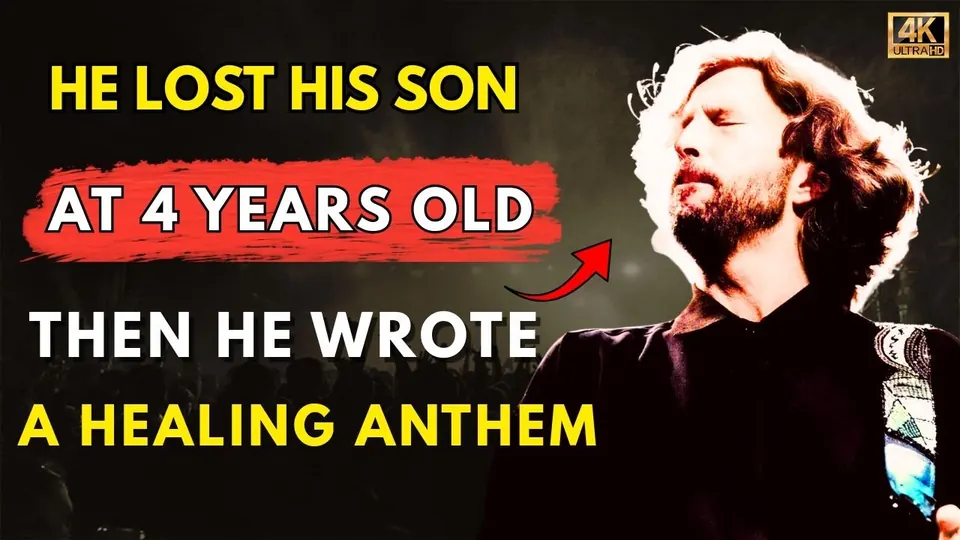
On March 20, 1991, Eric Clapton's four-year-old son, Conor, died after falling from a 53rd-floor window in New York City. Clapton wrote the first verse of this song, and Will Jennings helped him finish it.
It first appeared on the soundtrack of the film Rush and reached No. 2 on the Billboard Hot 100. Clapton also performed it for MTV Unplugged, and at the 1993 Grammys it won Record of the Year, Song of the Year and Best Male Pop Vocal Performance.
In 2004 he stopped playing it, saying he no longer felt the loss he had felt when writing it. In later years the song returned to his concerts.
Why Sad Songs Can Help Us Heal
None of these songs were written to be hits. They came from a grieving father, two sons who lost their dads, friends mourning friends, and a singer facing the end of his life.
That honesty is what reaches us. A sad song can give words to feelings we have trouble saying out loud, and hearing someone else's grief can make our own feel a little less lonely.
How This Countdown Was Put Together
The ten songs come straight from our episode. For this page, every date, chart position and backstory was checked against sources such as Billboard chart history and published interviews. Where a popular story could not be confirmed, we left it out.
Which of these songs brings back a memory of someone you miss, and what does it remind you of?
Sources and Further Reading
Topics in This Story
Your turn...
Which song takes you right back — and where were you when you first heard it?
Tell us the story — fellow fans would love to hear it.
We check every fact — but if you spot a mistake, we'd love to know.Report a correction →