 22:07Oldies Music · 1966 · Classic Rock & Roll
Rock Songs From 1971 You Forgot You Loved
Episode: 10 Unforgettable Rock Songs from 1971 You Forgot You Loved
From Sora Music Rewind · 21 min ·This episode plays on YouTube — the button opens it in a new tab.
About These Rock Songs From 1971
The rock songs from 1971 came out of a year when long album tracks, quiet acoustic ballads and loud anthems all shared the airwaves. FM radio was making room for eight-minute songs, while AM radio still turned three-minute singles into hits.
This episode counts down ten records from that year. Chart positions and recording details below were checked against Billboard records and other reliable sources, and a few popular legends have been corrected along the way.
The Countdown: 10 Unforgettable Rock Songs From 1971
#10: Stairway to Heaven — Led Zeppelin (1971)
Jimmy Page said the first part of the music came to him one night at Bron-Yr-Aur, a remote cottage in Wales, in 1970. Robert Plant wrote the lyrics at Headley Grange, a country house in Hampshire, England, where the band made their fourth album.
Atlantic Records wanted a single, but manager Peter Grant turned down the requests, and it was never sold as a single in America. Fans bought the album instead, released November 8, 1971. It became the most-requested song on American FM radio, with an estimated 2.87 million U.S. plays by its 20th anniversary. On stage, Page used a double-neck guitar to switch between twelve-string and six-string parts.
#9: American Pie — Don McLean (1971)
On February 4, 1959, a 13-year-old paperboy in New Rochelle, New York, opened his bundle of newspapers and read that Buddy Holly had died in a plane crash. That boy was Don McLean.
He recorded "American Pie" at the Record Plant in New York in May 1971. After two weeks of rehearsals that did not work, the song came together once pianist Paul Griffin joined at the last minute.
At about eight and a half minutes, it was split across both sides of the single. Stations first played only side one, then switched to the full version because listeners asked for it. It reached No. 1 on the Billboard Hot 100 in January 1972 and stayed four weeks.
#8: Imagine — John Lennon (1971)
John Lennon finished "Imagine" one morning in early 1971 at a Steinway piano in his home at Tittenhurst Park, near Ascot, England, with Yoko Ono beside him. Poems from her 1964 book Grapefruit inspired the lyrics, and in 2017 she was officially recognized as a co-writer.
The basic track was cut in Lennon's home studio with Phil Spector co-producing, and the second of three takes was used. Some religious listeners objected to the lyrics, but the record reached No. 3 on the Billboard Hot 100.
#7: Brown Sugar — The Rolling Stones (1971)
Mick Jagger wrote most of "Brown Sugar" in 1969 while filming the movie Ned Kelly. The band recorded it that December at Muscle Shoals Sound Studio in Alabama, and it spent two weeks at No. 1 in America in 1971.
Plenty of fans danced to it without thinking much about the words, which touch on slavery and sex. In a 1995 Rolling Stone interview, Jagger called it "such a mishmash" and said he would probably censor himself today. In 2021 the band dropped it from their U.S. tour after playing it nearly every night since 1970, though Keith Richards said he hoped it could return.
#6: A Horse with No Name — America (1971)
Dewey Bunnell, a young American living in England, wrote this song at musician Arthur Brown's home near Puddletown, Dorset. He was remembering childhood drives through the deserts of Arizona and New Mexico.
Some U.S. stations, most notably WHB in Kansas City, banned it because "horse" was slang for heroin. Bunnell described the song as a way to get away from life's confusion. Released in Britain in late 1971, it went to No. 1 in America in 1972, replacing Neil Young's "Heart of Gold." Many listeners first assumed Young was singing.
#5: Baba O'Riley — The Who (1971)
Many people call it "Teenage Wasteland," but the title honors the Indian spiritual teacher Meher Baba and the American composer Terry Riley. Pete Townshend wrote it for Lifehouse, a project he later abandoned.
One idea was to turn Meher Baba's vital signs into synthesizer music. When that fell through, Townshend recorded a Lowrey organ on its marimba repeat setting for that famous opening. He said some lyrics were inspired by the garbage fans left at the 1969 Isle of Wight Festival.
Dave Arbus of East of Eden played the violin finale, credited as produced by Keith Moon. In America the song was only on the album Who's Next, never a single.
#4: Maggie May — Rod Stewart (1971)
Rod Stewart said the song told a true story about an older woman he met at the Beaulieu Jazz Festival in 1961. It was cut in two takes. Drummer Micky Waller's kit had no cymbals that day, so the crashes were added later.
Ray Jackson of Lindisfarne played the mandolin, reportedly for about £15, and the album credit says his name slipped Stewart's mind. Mercury put the song on the B-side of "Reason to Believe," but radio played the flip side instead. It hit No. 1 in both the U.S. and the U.K., holding the American top spot for five weeks that fall.
#3: Life on Mars? — David Bowie (1971)
In 1968, a little-known David Bowie wrote English words for the French song "Comme d'habitude," but the publishers rejected them. Paul Anka later wrote new lyrics to that melody, and it became "My Way" for Frank Sinatra.
Bowie wrote "Life on Mars?" partly as a parody of the Sinatra hit, and the Hunky Dory sleeve says it was "inspired by Frankie." Rick Wakeman played piano and Mick Ronson arranged the strings. The lyrics follow a girl who escapes her dull life at the movies. Released as a single in June 1973, it reached No. 3 in Britain.
#2: What Is Life — George Harrison (1971)
George Harrison wrote this song very quickly in 1969, while driving to a Billy Preston session. He first meant it for Preston, then kept it. Recorded at Abbey Road for All Things Must Pass, with Eric Clapton on guitar, it was released as a U.S. single on February 15, 1971, and reached No. 10.
Five days earlier, Bright Tunes had sued Harrison, claiming "My Sweet Lord" copied "He's So Fine." In 1976 a judge ruled the copying was unintentional but still an infringement. About $1.6 million in damages was recommended, but in 1981 the court cut what he owed to $587,000.
#1: Joy to the World — Three Dog Night (1971)
Hoyt Axton wrote this song, and some of its words were nonsense from the start. According to one band member, the first opening line was about a prophet, and nobody liked it. Jeremiah the bullfrog took over.
Danny Hutton and Cory Wells did not want to record it, but Chuck Negron felt the band needed a "silly song," and he sang lead. It spent six weeks at No. 1, the longest run of 1971, and was Billboard's top single of the year.
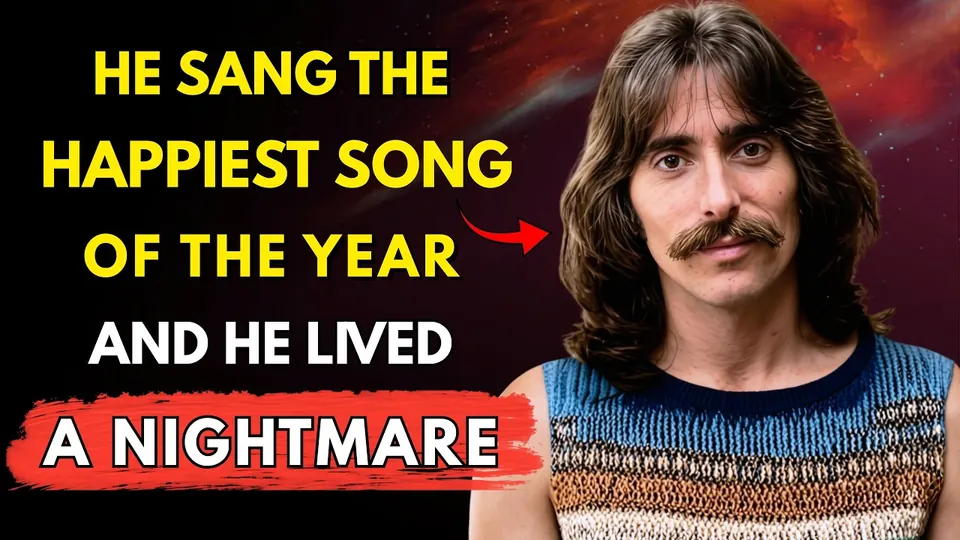
Behind the cheerful sound, Negron was sinking into heroin addiction. He went through more than thirty treatment programs before getting clean in 1991, and told his story in the book Three Dog Nightmare. Chuck Negron died in February 2026, at 83.
Why the Rock Songs of 1971 Still Matter
This list is full of surprises. A B-side became a No. 1 hit. An eight-minute song became FM radio's most-requested track without ever being sold as a single. A "silly song" the band nearly turned down became the biggest record of the year.
Many of these songs also carried heavier stories than their sound suggested, from a boy reading sad news on his paper route to a singer fighting addiction for years. That mix of joy and weight is part of why they still feel so personal.
Which of these 1971 songs takes you straight back, and who were you with when you first heard it?
Sources and Further Reading
Topics in This Story
Your turn...
Which song takes you right back — and where were you when you first heard it?
Tell us the story — fellow fans would love to hear it.
We check every fact — but if you spot a mistake, we'd love to know.Report a correction →
More Classic Rock & Roll Stories
22:07Oldies Music · 1966 · Classic Rock & Roll 27:48Oldies Music · Stories Behind the Songs
Best-Selling Rock Song in History: The Secret
 20:04Oldies Music · 1977 · Classic Rock & Roll