 19:57Oldies Music · 1960s · Novelty & Joke Songs
Novelty Songs That Became Global Hits
Episode: 10 Insane Joke Songs That Became Global Hits
From Sora Music Rewind · 19 min ·This episode plays on YouTube — the button opens it in a new tab.
What Makes Novelty Songs That Became Hits So Memorable
Novelty songs that became hits have a special place in pop history, because nobody, sometimes not even the artist, expected them to last. A wink, a twist ending or a cheeky chorus can stick in the ear long after a serious ballad fades.
This episode stretches the idea a little. Only a few of these ten records were built as jokes. Others were serious songs that listeners heard as jokes, or story songs with a punchline tucked inside. We checked each one against chart records and reliable histories, and we corrected or left out the details that did not hold up.
The Countdown: 10 Joke Songs and Accidental Hits
#10: Turning Japanese — The Vapors (1980)
David Fenton, the Vapors' singer and songwriter, meant this as a love song. He drew on his own experience of rejection, picturing a young man pining over a photograph of a girl who has left him.
Many listeners decided the title was a sly double meaning. Fenton has described the song in plainer terms, as being about the clichés of young angst and turning into something you never expected. Produced by Vic Coppersmith-Heaven, it reached No. 3 in Britain, No. 1 in Australia and No. 36 on the Billboard Hot 100.
#9: Black Betty — Ram Jam (1977)
"Black Betty" is an old African American work song, recorded by Lead Belly in 1939 and collected even earlier. Bill Bartlett, once lead guitarist of the Lemon Pipers, turned it into a loud rock arrangement with his group Starstruck, and it became a regional hit.
Producers then built the band Ram Jam around Bartlett and released the record nationally. The NAACP and the Congress of Racial Equality called for a boycott over the lyrics, but the single still reached No. 18 in America and No. 7 in Britain. It later became a fixture at sporting events.
#8: Lola — The Kinks (1970)
Ray Davies said the story was inspired by the band's manager, Robert Wace, dancing with a cross-dresser in a Paris club. Davies turned the night into a warm, funny story song rather than a mean-spirited one.
One word nearly sank it. The BBC did not allow brand names on the air, so "Coca-Cola" had to go. On June 3, 1970, Davies flew from New York, where the Kinks were on tour, to London and back, a round trip of about 6,000 miles, just to sing "cherry cola" instead. The single reached No. 2 in Britain and No. 9 in the United States.
#7: Escape (The Piña Colada Song) — Rupert Holmes (1979)
The story is pure situation comedy. A bored man answers a personal ad from a woman who loves piña coladas, only to discover at the meeting place that she is his own partner.
Holmes first had the chorus mention Humphrey Bogart. At the last minute he switched to the cocktail, though he admitted he had never tasted one. The record became the final Billboard No. 1 of the 1970s, then returned to the top in January 1980.
#6: Short People — Randy Newman (1977)
Randy Newman wrote this as satire. The narrator is a bigot, and the point was how silly prejudice sounds when it picks on something as harmless as height. Glenn Frey, J.D. Souther and Timothy B. Schmit sang backing vocals.
Plenty of people took it at face value. Newman said the song brought him several threats, and in 1978 a Maryland lawmaker tried to make playing it on the radio illegal; the state attorney general advised that such a law would violate the First Amendment. The single spent three weeks at No. 2 on the Hot 100.
#5: Blitzkrieg Bop — Ramones (1976)
The Ramones' first single was deliberately simple: short, fast and built on a chant anyone could shout. Tommy Ramone said the "Hey ho, let's go" idea came from the crowd chant in the Bay City Rollers' hit "Saturday Night." Dee Dee Ramone gave the song its title, which started out as "Animal Hop."
Released in February 1976, it did not make the Billboard Hot 100. Its reputation grew anyway. Rolling Stone placed it on its 2004 list of the 500 greatest songs, and today it is certified double platinum in the United States.
#4: My Sharona — The Knack (1979)
Doug Fieger was 25 when he met 17-year-old Sharona Alperin, and he was instantly smitten. He and guitarist Berton Averre worked out the song together, and Fieger claimed it was written in about 15 minutes.
That hiccuping vocal and pounding beat carried it to six weeks at No. 1. The crush was real, too. Sharona became his girlfriend for about four years, and decades later Fieger described the two of them as great friends.
#3: Stayin' Alive — Bee Gees (1977)
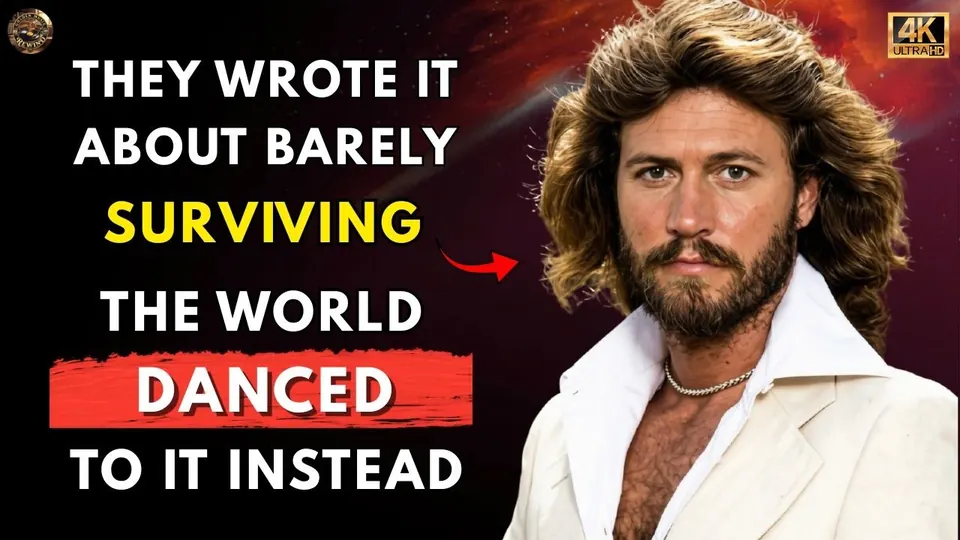
This one is less a joke than an irony. Robin Gibb said the song is about survival on the streets of New York, yet the world heard a strutting dance anthem. The brothers wrote it while Saturday Night Fever was still in early stages and did not yet have a title.
When the sessions needed a steady beat, the brothers and co-producer Albhy Galuten lifted two bars of drumming from the finished "Night Fever" and repeated them on tape. The record held No. 1 for four weeks in early 1978. Its success also branded the brothers as a disco act, a label they had mixed feelings about.
#2: Lyin' Eyes — Eagles (1975)
The idea was born at Dan Tana's, a Los Angeles restaurant and bar. Glenn Frey noticed a young woman arriving with a much older, wealthy man and made the offhand remark that gave the song its title. Don Henley later said Frey was the main writer.
What began as a quip became a six-minute story about a lonely marriage. It reached No. 2 on the Hot 100, crossed over to the country chart and won the Grammy for Best Pop Vocal Performance by a Duo, Group or Chorus.
#1: Born to Be Alive — Patrick Hernandez (1978)
The French singer Patrick Hernandez released this disco single in late 1978, and in 1979 it raced around the world. It topped the charts in France, Italy and Canada, among others, reached No. 16 on the Billboard Hot 100, hit No. 1 on Billboard's disco chart and sold more than a million copies in the United States.
The best trivia is true. Hernandez's producers held dancer auditions in New York for his world tour, and one of the dancers chosen was a young Madonna, years before her own fame. Hernandez never repeated that success in America, and he is often remembered as a one-hit wonder there.
Why Listeners Heard Jokes the Writers Never Told
Look closely at this list and a pattern appears. Randy Newman's satire was taken literally. Fenton's sad love song was taken as a wink. A gritty song about survival became a dance-floor celebration. The audience, not the writer, often decided what a song meant.
The real jokes, a cocktail swapped in for Humphrey Bogart or a soda brand re-sung across an ocean, are small. But they show how much care went into records that sound effortless. That mix of fun and craft is why these songs still turn up at ballgames, weddings and family parties.
Which of these songs did you first hear on the radio, and did you take it as a joke or as the real thing?
Sources and Further Reading
Topics in This Story
Your turn...
Which song takes you right back — and where were you when you first heard it?
Tell us the story — fellow fans would love to hear it.
We check every fact — but if you spot a mistake, we'd love to know.Report a correction →
More Novelty & Joke Songs Stories
19:57Oldies Music · 1960s · Novelty & Joke Songs 22:42Oldies Music · Novelty & Joke Songs
Songs Written as a Joke That Became Huge Hits
 20:06Oldies Music · Novelty & Joke Songs