 22:05Oldies Music · Banned & Controversial Songs
Banned Disco Songs Too Controversial for Radio
Episode: 13 Songs From The Disco Era So Controversial They Were Banned
From Sora Music Rewind · 30 min ·This episode plays on YouTube — the button opens it in a new tab.
About These Banned Disco Songs
Banned disco songs make a great legend, but the real history is a little more complicated. A few records on this list truly were kept off the air. Others were censored before they left the studio, hidden on the wrong side of a single, or simply made some listeners uneasy.
This countdown follows the episode from #13 to #1. Every entry was checked against chart records and reliable references, and where the script overstated a ban or a number, the facts below have been corrected.
The Countdown: 13 Disco-Era Songs That Stirred Controversy
#13: Le Freak — Chic (1978)
Nile Rodgers has said this song began on New Year's Eve 1977, when he and bassist Bernard Edwards were turned away at the door of Studio 54. Grace Jones had invited them but had not told the staff.
They went home and turned their frustration into a chant. Rodgers says the original refrain could never have been said on the radio, so they changed it to "freak out." Nobody had to ban it. The band cleaned it up first, and the record spent six non-consecutive weeks at No. 1 on the Billboard Hot 100.
#12: I Will Survive — Gloria Gaynor (1978)
Polydor did not think this was the hit. It came out as the B-side of "Substitute," a Righteous Brothers cover that barely charted.
Disc jockeys, starting with Studio 54's Richie Kaczor, flipped the record over, and the label soon promoted "I Will Survive" instead. Gaynor sang it in a back brace after surgery that followed a fall on stage, while also grieving a recent loss. It reached No. 1 in March 1979 and won the Grammy for Best Disco Recording, an award presented only once, in 1980.
#11: Love in C Minor — Cerrone (1976)
French drummer Marc Cerrone released this long, sultry track on his own label, Malligator. Its suggestive original sleeve shocked many people in France.
Copies reached New York apparently by mistake, club DJs began playing it, and Atlantic Records signed Cerrone. For the American release, the racy cover was swapped for a much tamer design. The music was not banned. The album art was what had to change.
#10: Ring My Bell — Anita Ward (1979)
Frederick Knight first wrote this as a teen song for 11-year-old Stacy Lattisaw, about kids chatting on the telephone. It ended up with Anita Ward, then a substitute teacher in Memphis.
Contrary to a popular story, the words were not left untouched. The verses were reworked to sound more grown-up, and Ward was reluctant to record it at first. It went to No. 1 in America and Britain. In 2010 Billboard placed it on a list of the 50 sexiest songs of all time, but we found no record of a formal radio ban.
#9: You Make Me Feel (Mighty Real) — Sylvester (1978)
Sylvester sang this anthem in a soaring falsetto, backed by Martha Wash and Izora Rhodes, who later became The Weather Girls of "It's Raining Men." It reached No. 1 on Billboard's dance chart and No. 36 on the Hot 100, and it became an anthem of being exactly who you are.
Sylvester died of AIDS-related complications on December 16, 1988, at 41. In his will, he left future royalties from his music to two San Francisco charities, Project Open Hand and the AIDS Emergency Fund.
#8: Lady Marmalade — Labelle (1974)
Bob Crewe and Kenny Nolan wrote this song about a man's night with a working girl in New Orleans. Allen Toussaint produced it in that city, with the Meters as the rhythm section.
The French line in the chorus is a frank invitation, which raised eyebrows once people translated it. Patti LaBelle later said she did not understand the French when she recorded it. The single reached No. 1 on the Hot 100 in March 1975. We could not confirm the often-repeated claim that radio stations banned it.
#7: Rasputin — Boney M. (1978)
This one does have a documented restriction. In December 1978, Boney M. played ten shows in Moscow, and singer Liz Mitchell later recalled that they were not allowed to perform "Rasputin" there. In 1979, Polish officials asked them not to sing it at the Sopot festival. They sang it anyway, and Polish television cut it.
The deep male voice on the record belongs to producer Frank Farian, not dancer Bobby Farrell, who admitted he did not sing on the hits. Farrell died in Saint Petersburg on December 30, 2010, at 61, the same date Rasputin was killed in that city in 1916.
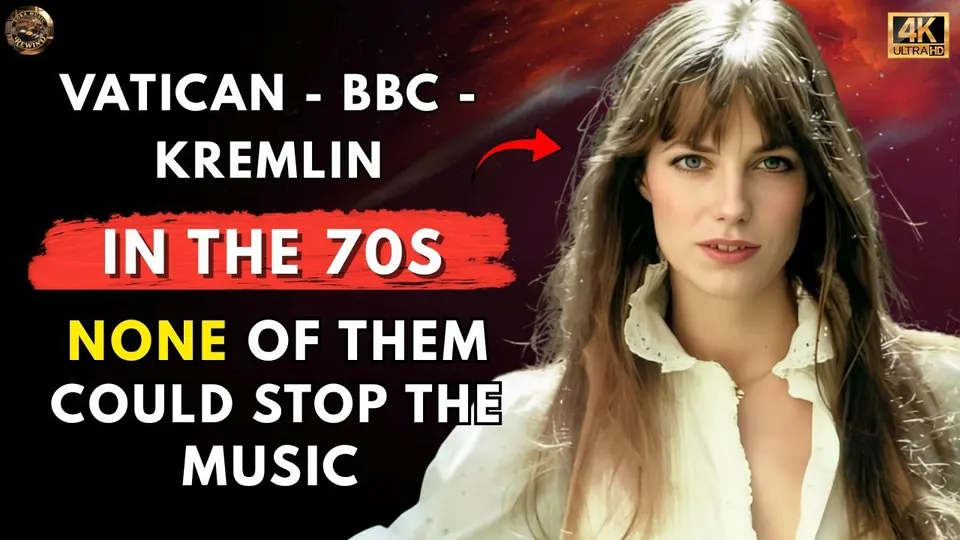
#6: Je t'aime... moi non plus — Jane Birkin and Serge Gainsbourg (1969)
This duet came out years before the disco boom, but no song on this list was banned more widely. Gainsbourg first recorded it with Brigitte Bardot, who asked him not to release it after her husband objected.
He recorded it again with Jane Birkin in 1969. The Vatican denounced it through its newspaper, L'Osservatore Romano, and it was kept off the radio in Britain, Italy, Spain, Sweden and Brazil. In Britain, Fontana withdrew the single after it reached No. 2. Re-released on Major Minor, it went to No. 1, the first banned record and the first foreign-language single to top the UK chart.
Birkin later gave her name to the famous Hermès bag, after a chance conversation on a flight with company chief Jean-Louis Dumas. She died in 2023.
#5: Rock Your Baby — George McCrae (1974)
Harry Wayne Casey and Richard Finch of KC and the Sunshine Band recorded the backing track as a demo in about 45 minutes. It was meant for George's wife, Gwen McCrae, but she was late for the session, so George sang it himself.
It went to No. 1 in America and Britain and has sold more than 11 million copies. It was never banned, but it helped launch the disco era.
#4: The Hustle — Van McCoy (1975)
Van McCoy wrote this instrumental after his partner, Charles Kipps, saw dancers doing the Hustle at a New York club. It appeared on the album Disco Baby, which the label released with low expectations.
The single reached No. 1 on the Hot 100, won the Grammy for Best Pop Instrumental Performance, and helped spread the dance nationwide. McCoy died of a heart attack in July 1979, at just 39.
#3: Shame — Evelyn "Champagne" King (1977)
Evelyn King was a teenager helping her mother clean offices at Philadelphia International Records when producer Theodore "T." Life overheard her singing and began coaching her.
"Shame," released by RCA in 1977, reached No. 9 on the Hot 100 and No. 7 on the R&B chart, and earned a gold record. It never faced a ban.
#2: Don't Leave Me This Way — Thelma Houston (1976)
Harold Melvin and the Blue Notes recorded this song first in 1975, with Teddy Pendergrass on lead, but it was not an American single at the time. Motown then gave it to Thelma Houston, and producer Hal Davis turned it into a driving disco record.
Her version reached No. 1 on the Hot 100 in April 1977 and won the Grammy for Best Female R&B Vocal Performance. In 1986, the Communards took it to No. 1 in Britain.
#1: Good Times — Chic (1979)
Chic's follow-up to "Le Freak" reached No. 1 on the Hot 100 in August 1979. Its real legacy is Bernard Edwards's bass line.
That fall, Nile Rodgers has recalled, he heard a club DJ play a new record built on the same groove: "Rapper's Delight" by the Sugarhill Gang. Rodgers and Edwards threatened legal action, and a settlement credited them as co-writers.
Which of These Songs Were Really Banned?
Only one song here was banned on a large scale: "Je t'aime... moi non plus." "Rasputin" faced real restrictions behind the Iron Curtain. Chic rewrote the chorus of "Le Freak" before release, and Cerrone's cover was replaced in America.
The rest drew raised eyebrows or were doubted by their own labels.
Why These Disco Songs Outlasted Their Critics
What links these records is not scandal. They found their audience through club DJs, word of mouth and crowded dance floors, often before radio or the record companies caught on.
Which of these songs takes you back to a certain dance floor, and who were you dancing with when you first heard it?
Sources and Further Reading
Topics in This Story
Your turn...
Which song takes you right back — and where were you when you first heard it?
Tell us the story — fellow fans would love to hear it.
We check every fact — but if you spot a mistake, we'd love to know.Report a correction →